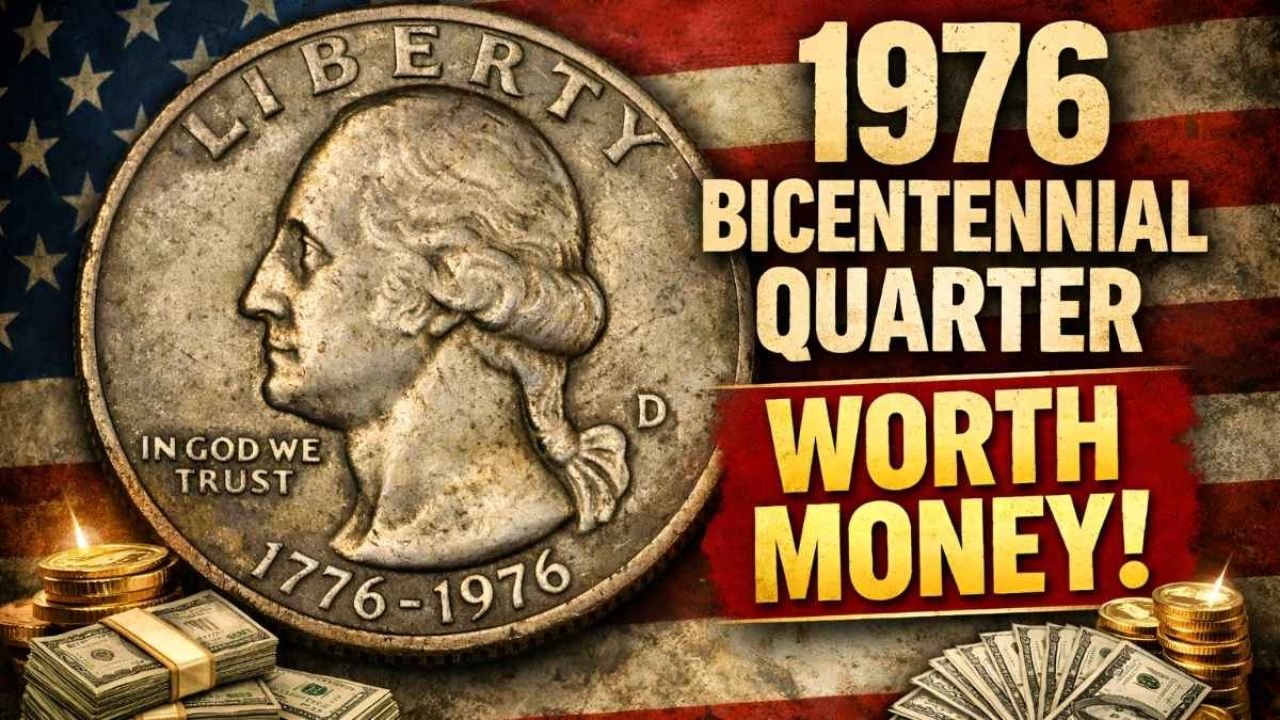
The 1976 Bicentennial Quarter remains one of the most recognizable modern U.S. coins ever produced. Created to celebrate the 200th anniversary of American independence, it features a distinctive reverse design: a colonial drummer beside a torch encircled by thirteen stars. The dual date “1776–1976” further distinguishes it from standard Washington quarters.
While millions were minted and most examples still trade at face value, select Bicentennial Quarters have emerged as serious collector pieces. In 2026, demand continues to center on high-grade examples, silver issues, and notable mint errors. For informed collectors, this commemorative coin offers both historical appeal and targeted investment potential.
Understanding Why Some Bicentennial Quarters Are Valuable
Not every Bicentennial Quarter carries a premium. Value is driven by three core factors: rarity, condition, and collector demand.
Limited Silver Composition
Although the majority of Bicentennial Quarters were struck in copper-nickel clad for general circulation, the U.S. Mint also produced 40 percent silver versions for collectors. These silver coins were sold in special mint and proof sets and were never intended for everyday use. Their lower mintage and precious metal content immediately set them apart.
High-Grade Condition
Condition dramatically affects pricing. A circulated clad quarter may be worth only twenty-five cents, but a flawless Mint State example graded MS67 or higher can command meaningful premiums. Silver proofs in pristine condition are especially desirable.
Mint Errors and Varieties
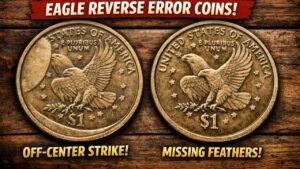
Doubled dies, off-center strikes, clipped planchets, and wrong planchet errors can transform an otherwise common coin into a standout collectible. The more dramatic and visually obvious the error, the stronger the market response.
Circulation Strikes vs. Silver Collector Issues
Understanding the difference between circulation coins and collector versions is essential.
Copper-Nickel Clad Quarters
These were struck at the Philadelphia, Denver, and San Francisco Mints for everyday use. Most remain abundant today. Unless found in exceptional condition or with a significant error, they typically trade at face value.
40 Percent Silver Quarters
Produced primarily at the San Francisco Mint, these were issued in both uncirculated and proof formats. The easiest way to identify a silver version is by examining the coin’s edge. Unlike clad quarters, silver coins lack the visible copper stripe along the rim.
Silver Bicentennial Quarters carry intrinsic metal value in addition to collector demand, providing a modest hedge against market fluctuations.
The Role of Proof Coins in the Market
Proof Bicentennial Quarters were struck using specially prepared dies and polished planchets, resulting in sharp detail and mirror-like surfaces. These coins were never released into circulation and were sold directly to collectors.
Silver proof examples are particularly sought after. In top-certified grades, they often sell for multiples of standard proof coins. Deep cameo contrast, flawless surfaces, and original packaging can all enhance value.
Proof coins represent the premium tier of the Bicentennial Quarter market and remain highly liquid among serious collectors.
Notable Errors That Command Attention
Error coins continue to drive excitement in the numismatic world. With Bicentennial Quarters, several categories stand out.
Doubled Die Varieties
Some coins display noticeable doubling in lettering or design elements. Strong examples with clear visual separation tend to attract competitive bidding.
Off-Center Strikes
These occur when the planchet is misaligned during striking, leaving part of the design missing. Coins with 10 to 50 percent off-center displacement are particularly desirable.
Wrong Planchet Errors
Occasionally, a Bicentennial Quarter was struck on a planchet intended for another denomination. These rare mint mistakes can generate substantial premiums when authenticated.
Clipped Planchets
A curved or straight clip caused during metal blank preparation can add collectible interest, especially when paired with strong eye appeal.
Authentication is essential when evaluating error coins. Certified examples consistently achieve higher resale values.
Market Trends in 2026
In 2026, the Bicentennial Quarter market remains stable with pockets of strong performance.
Increased Focus on Quality
Collectors are prioritizing top-condition coins rather than quantity. Registry competition has pushed high-grade certified examples to new price levels.
Strong Demand for Silver
With broader investor interest in tangible assets, silver Bicentennial Quarters have maintained steady demand. Although not rare in absolute terms, pristine examples are increasingly difficult to source.
Online Auction Activity
Digital marketplaces continue to expand global participation. Competitive bidding for rare errors and gem-condition coins reflects sustained enthusiasm for modern commemorative issues.
Overall, while common coins remain plentiful, standout examples show consistent liquidity and pricing strength.
Collector Demand and Cultural Appeal
Part of the Bicentennial Quarter’s enduring popularity stems from its cultural symbolism. For many Americans, it represents a milestone celebration of national history. The drummer design feels both nostalgic and distinctive, separating it visually from traditional Washington quarters.
Because of its recognizability, the coin often serves as an entry point for new collectors. This broad base of interest supports long-term demand, particularly for premium specimens.
The coin’s blend of accessibility and historical meaning keeps it relevant across generations.
How to Identify a Valuable Bicentennial Quarter
Collectors evaluating Bicentennial Quarters should take a systematic approach:
- Check the edge for silver composition
- Inspect surfaces for proof-like finishes
- Use magnification to identify doubling or strike anomalies
- Assess luster and surface preservation
- Consider professional grading for high-quality examples
Even minor differences in condition can significantly impact value. A careful inspection process increases the likelihood of identifying hidden premiums.
The Importance of Professional Grading
Professional grading services such as PCGS and NGC provide authentication, condition assessment, and encapsulation. Certified coins typically command stronger prices because buyers trust the grade and authenticity.
High-grade examples with strong eye appeal and verified silver content tend to outperform uncertified coins in resale environments.
Grading also protects long-term value by preserving the coin in a tamper-resistant holder.
Investment Perspective: Opportunity or Novelty?
From an investment standpoint, Bicentennial Quarters occupy a niche category. They are modern, widely recognized, and historically significant. However, only select examples offer substantial upside potential.
Key investment candidates include:
- High-grade silver proofs
- Dramatic, authenticated error coins
- Top-population registry examples
While not every Bicentennial Quarter will deliver extraordinary returns, premium-quality coins with strong certification have demonstrated steady appreciation.
Final Thoughts: Rare Bicentennial Quarters Worth Money
At first glance, the 1976 Bicentennial Quarter may appear ordinary. Yet beneath its familiar design lies meaningful potential for collectors who understand the market.
Silver compositions, pristine proof strikes, and authenticated mint errors continue to attract attention in 2026. For enthusiasts, these coins offer more than financial value. They represent a historic celebration captured in metal.
Whether discovered in a collection, acquired through auction, or preserved from an original mint set, a standout Bicentennial Quarter can be both a tangible piece of history and a strategic addition to a modern numismatic portfolio.