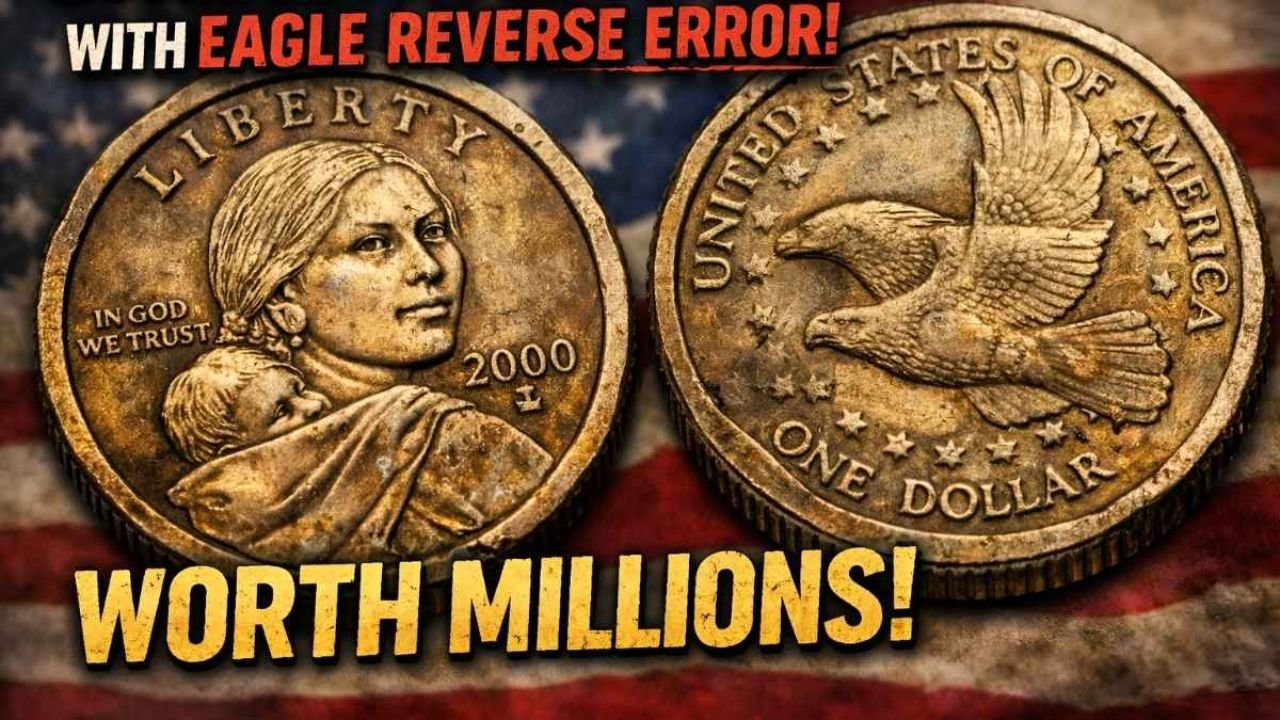
The Sacagawea Dollar stands as one of the most distinctive modern coins ever produced by the United States Mint. Introduced in 2000, it features Sacagawea carrying her infant son, Jean Baptiste, on the obverse, while the reverse originally displayed a soaring eagle encircled by 17 stars. Though minted in large numbers for circulation, a handful of extraordinary error varieties have elevated this golden dollar into legendary status among serious collectors.
Among these rarities, one stands above the rest: the Sacagawea Dollar mule error featuring an unexpected Washington Quarter reverse. Often described in headlines as “worth millions,” this coin represents one of the most dramatic minting mistakes in modern American numismatics.
For investors and collectors seeking high-value opportunities, understanding this error is essential.
The Origins of the Sacagawea Dollar
The Sacagawea Dollar was introduced to replace the Susan B. Anthony Dollar and encourage greater public use of $1 coins. Its golden hue, created through a manganese-brass clad composition, gave it a distinctive appearance compared to traditional silver-toned coins.
Minted in Philadelphia, Denver, and San Francisco, the coin was produced in both circulation strikes and proof versions. While it never achieved widespread everyday use, it developed a strong following in collector circles due to its bold design and cultural symbolism.
Most Sacagawea Dollars remain common. However, rare production anomalies have turned select examples into six- and even seven-figure collectibles.
Understanding the Eagle Reverse Design
From 2000 to 2008, the reverse of the Sacagawea Dollar featured a soaring eagle designed by Thomas D. Rogers Sr. The eagle, surrounded by 17 stars representing the states at the time of the Lewis and Clark expedition, symbolized freedom and forward movement.
This reverse design is standard for early Sacagawea Dollars. However, the most famous error associated with the series involves the complete replacement of that eagle reverse with a different coin design altogether.
That is where the mule error enters the story.
The Mule Error That Changed Modern Coin Collecting
In numismatics, a “mule” occurs when two dies intended for different coins are mistakenly paired together. In the case of the Sacagawea Dollar mule, the obverse of the Sacagawea Dollar was struck with the reverse die of a Washington Quarter.
The result is extraordinary:
A golden dollar coin featuring Sacagawea on the front and a Washington Quarter reverse on the back.
This pairing should never have existed.
Only a very small number of these mule error coins are known. Because of their rarity and dramatic visual contrast, they have become some of the most famous error coins in modern U.S. history.
How Much Is the Sacagawea Mule Error Worth?
Auction records show confirmed sales reaching into the hundreds of thousands of dollars. High-grade specimens certified by leading grading services have sold for amounts exceeding $100,000, with elite examples commanding even higher prices in private transactions.
While headlines often claim values “worth millions,” that level typically applies only to the finest known examples under exceptional market conditions. Still, even conservative valuations place authenticated specimens among the most valuable modern U.S. coins ever discovered.
For comparison, most standard Sacagawea Dollars remain worth face value unless preserved in pristine proof condition.
Why Error Coins Command Premium Prices
Error coins captivate collectors for three primary reasons:
1. Extreme Rarity
Unlike commemorative issues, errors were never intended for release. Their scarcity is accidental, making surviving examples exceptionally limited.
2. Historical Significance
Major mint errors reveal insights into production processes and quality control at the U.S. Mint.
3. Visual Impact
A Sacagawea Dollar paired with a Washington Quarter reverse is immediately noticeable and unforgettable.
These elements combine to create intense collector demand, particularly among advanced numismatists who specialize in high-profile mint anomalies.
How to Identify a Genuine Mule Error
If you believe you have discovered a rare Sacagawea Dollar, careful examination is essential.
Here is what to look for:
- Sacagawea obverse with correct portrait and golden color
- Washington Quarter reverse featuring the eagle design used on quarters
- Correct dollar coin weight and manganese-brass composition
- No signs of tampering or post-mint alteration
Because counterfeit and altered coins exist, professional authentication is critical before assigning value.
The Role of Professional Grading Services
Organizations such as PCGS (Professional Coin Grading Service) and NGC (Numismatic Guaranty Company) authenticate and grade high-value coins. Certification provides:
- Confirmation of authenticity
- Official grade assessment
- Protective encapsulation
- Increased buyer confidence
For coins valued in six figures or more, third-party grading is non-negotiable. A certified mule error commands significantly higher market trust and liquidity than an uncertified specimen.
Other Valuable Sacagawea Dollar Errors
While the mule error receives the most attention, other collectible varieties include:
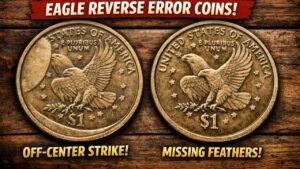
- Cheerios promotional dollars with enhanced tail feather details
- Off-center strikes
- Double-struck errors
- Die cracks and planchet defects
These typically range from modest premiums to several thousand dollars depending on rarity and condition.
However, none rival the dramatic impact of the Washington Quarter mule.
Preservation and Long-Term Value
If you own a high-grade Sacagawea Dollar or believe you have a rare error, proper storage is essential.
- Store coins in certified holders or archival-quality cases
- Avoid cleaning or polishing under any circumstances
- Keep coins in a stable, climate-controlled environment
- Minimize handling to preserve mint luster
Even minor surface damage can significantly reduce value in premium-grade coins.
Investment Outlook for Modern Error Coins
Rare modern errors have emerged as a compelling niche within alternative investments. As tangible assets, rare coins offer:
- Portfolio diversification
- Inflation hedge potential
- Strong collector-driven demand
- Limited supply
The Sacagawea mule error, in particular, holds iconic status. Its combination of design contrast, historical importance, and documented scarcity positions it as one of the crown jewels of modern American coinage.
That said, investors should approach the market with informed expectations. Not every Sacagawea Dollar is rare, and sensational online claims often exaggerate value. Authentication, market research, and professional consultation remain key.
Separating Fact From Hype
Stories of “million-dollar coins in circulation” generate excitement, but reality requires nuance.
The overwhelming majority of Sacagawea Dollars are common circulation coins. Only a handful of authenticated mule errors exist, and their discovery is exceptionally rare.
Collectors should rely on verified auction data and professional grading opinions rather than social media speculation.
Knowledge, not hype, drives successful collecting.
A Modern Coin Legend
The Sacagawea Dollar with the Washington Quarter reverse mule error has earned its place in numismatic history. It represents a rare intersection of accident, artistry, and opportunity.
While most Sacagawea Dollars remain everyday coins, a select few have transformed into six- and seven-figure treasures. For collectors, the allure lies not only in potential value but in the thrill of discovery and the preservation of American mint history.
In the world of rare coins, legends are not confined to centuries-old gold pieces. Sometimes, they are hidden in modern change — waiting for a trained eye to recognize them.